Concrete patios in Burbank CA, built around how the yard is used
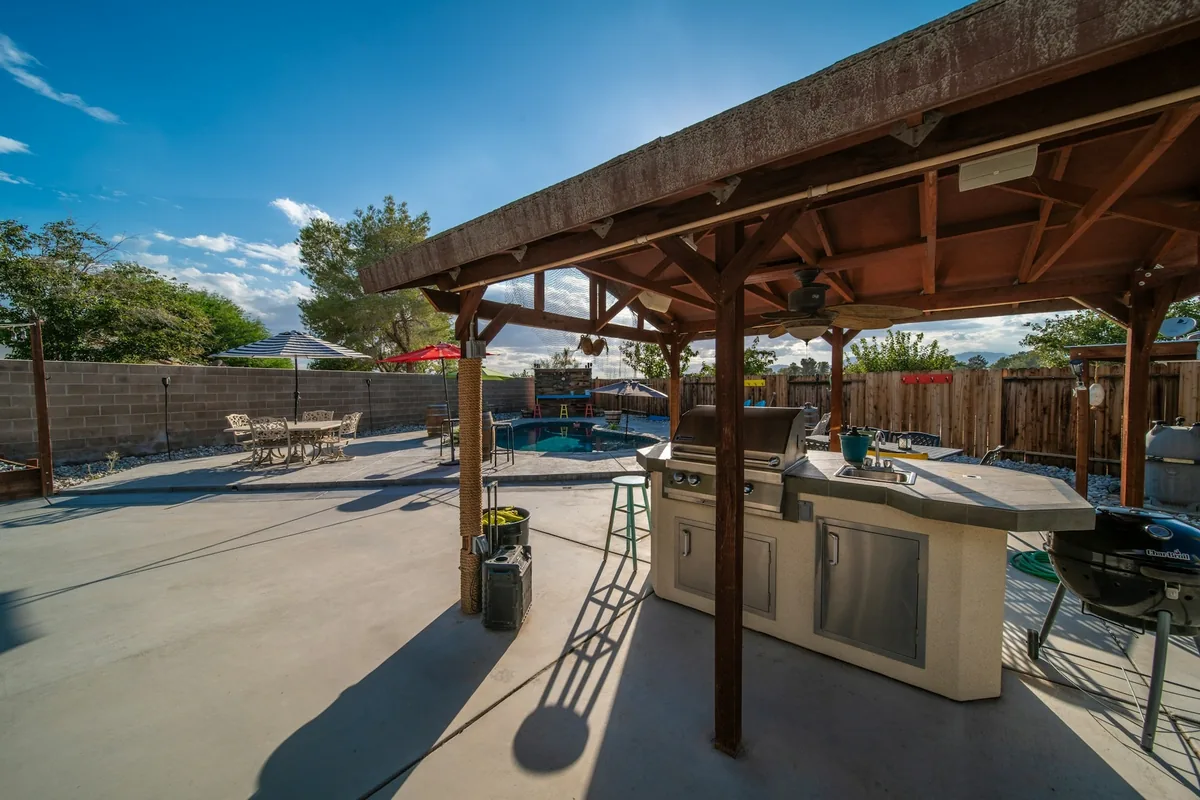
A Burbank backyard patio usually does three jobs at once: a place for the table, a path from the back door to the garage or a backyard unit, and a hard surface that keeps rain from turning the yard to mud. Good patios start from those uses. A table for six, a grill with clearance and a lounge corner each want their own zone, and the walk to the garage wants a straight line, not a detour around furniture.
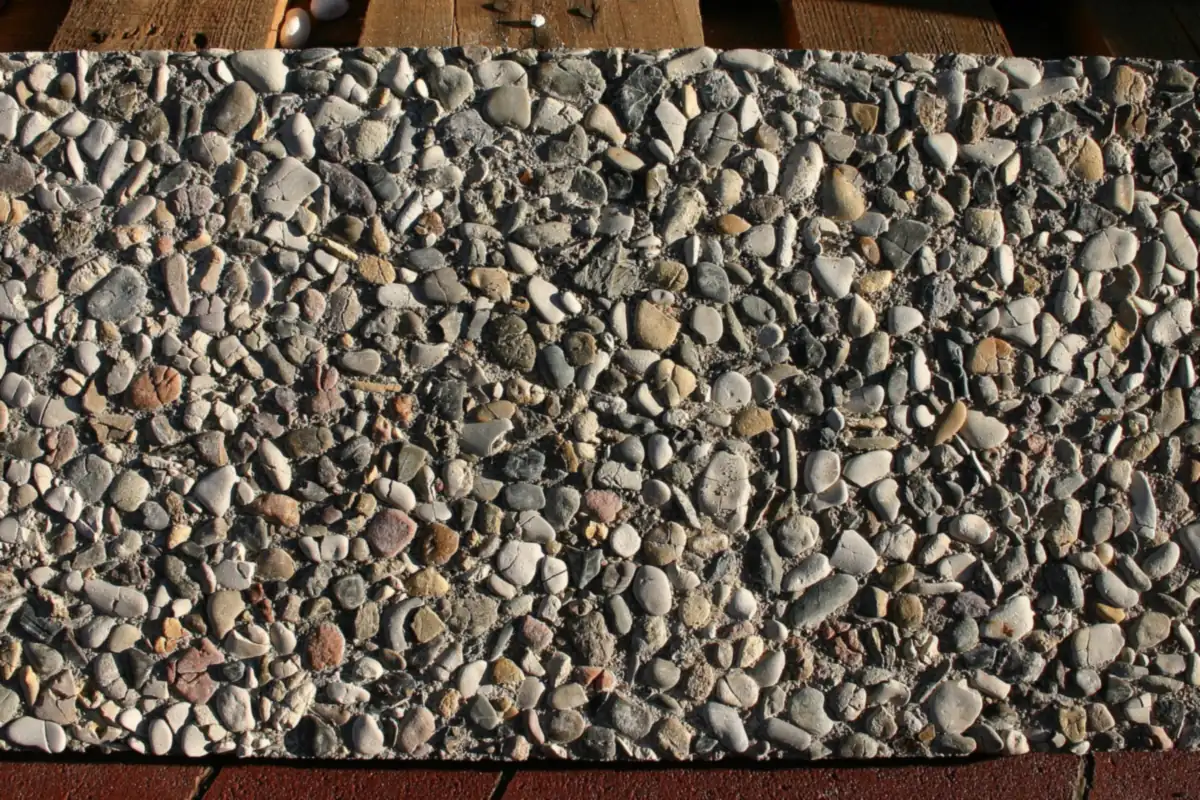
Most patios here are 4 inch reinforced slabs in a broom finish, which is the most affordable and the least slippery. Where the patio is the centerpiece, the field can be stamped concrete in Burbank or exposed aggregate, often with a plain border. Next to a pool, the slab becomes part of the concrete pool deck and follows its rules on grip and drains.
Patio covers and posts
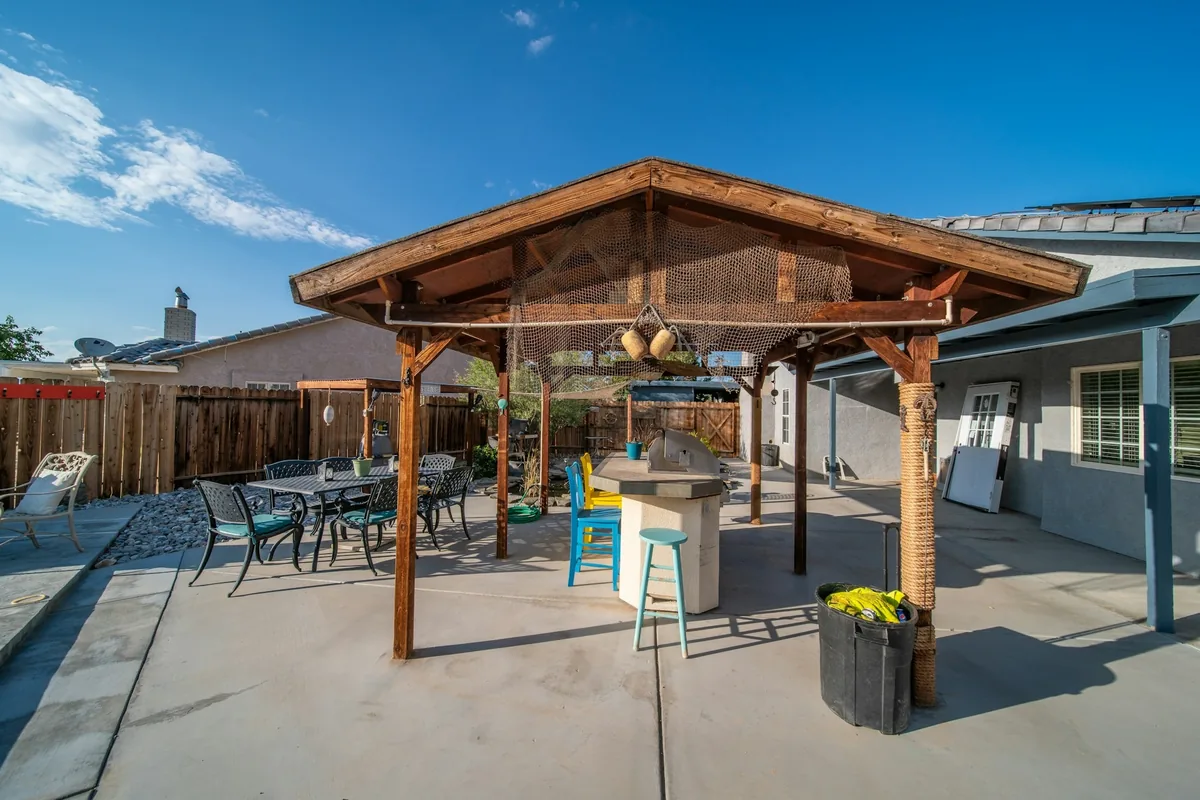
A wood or aluminum cover over the patio is a separate structure from the slab. Its posts usually need their own footings rather than bolting to the edge of a 4 inch slab, so it pays to decide on the cover before the pour and set the footings or post bases in the same job. Whether the cover itself needs a permit is a question for Building and Safety, not the concrete crew.
Drainage: the part people notice in February
Burbank gets most of its 13.91 inches of yearly rain in four months: February averages 3.95 inches, January 2.97, March 2.43 and December 2.02, while July and August see almost none. A patio poured flat or tilted toward the house looks fine all summer and floods the back door in the first winter storm.
The California Residential Code (section R401.3) requires hard surfaces within 10 feet of a foundation to fall at least 2 percent away from the building, a quarter inch per foot. That water then needs somewhere to go: a planted area, a gravel strip, or a drain line to an approved outlet, not the neighbor's yard.
What's under a Burbank patio
Most of Burbank's flats sit on sandy, gravelly alluvial soils (the USDA maps them as Urban land, Palmview and Tujunga) with only about 2 to 13 percent clay and a low shrink-swell rating. That's good news: these soils don't heave the way clay does. When a Burbank patio fails, it's usually because it was poured on loose fill, undermined by water running off a roof or a sprinkler, or lifted by roots. The fix is a properly compacted base and a slab that sheds water, more than extra thickness. The Burbank soil, faults and flood map guide has the detail.
Summer heat and a fresh slab
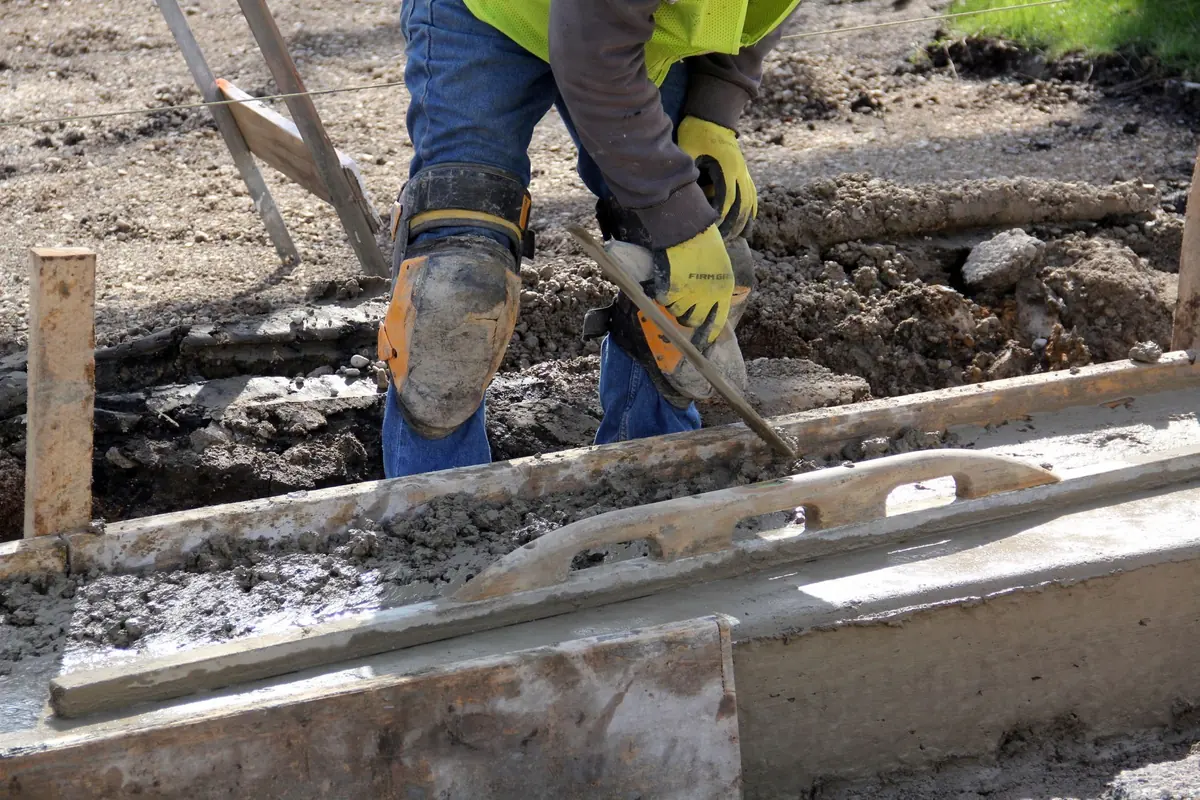
Fresh concrete needs water to cure, and a 95 degree afternoon pulls it out of the surface fast, which leads to shrinkage cracks and a dusty finish. In Burbank's hot months the truck is booked for early morning, the surface is finished before the sun is on it, and curing compound or wet curing keeps it from drying out over the next days.
Signs an old patio should be replaced
- Water pools against the house or runs toward the back door after rain.
- One corner or edge has dropped, leaving a lip people trip on.
- Cracks have opened wide enough to catch a heel or grow weeds.
- Roots have lifted a section, or the surface is flaking away.
- The slab is too small for a table and chairs with room to walk around them.
When the slab is sound and only a crack or a worn surface is the problem, concrete repair in Burbank may be enough.
Patio prices at a glance
| Size | Square feet | At $8 to $12 per sq ft |
|---|---|---|
| 10 x 20 ft | 200 | $1,600 to $2,400 |
| 16 x 20 ft | 320 | $2,560 to $3,840 |
| 20 x 30 ft | 600 | $4,800 to $7,200 |
Swipe sideways to see every column.
Rate: constructlytools, Los Angeles slab guide (updated May 19, 2026), flat valley lots. Sloped lots, decorative finishes and removal of an old slab add to these. Quotes vary by site.
The concrete patio cost in Burbank page breaks prices down by finish, slope and extras, and the concrete cost calculator prices your own measurements.
How a patio pour goes
- 1Lay out the shape and the fall
Strings mark the edges, and the slope is set so water runs away from the house to a planted area or a drain, never toward a neighbor.
- 2Remove, dig and compact
Old concrete and sod come out, the ground is cut to depth, and gravel base is watered and compacted in thin layers.
- 3Forms and reinforcement
Wood or steel forms set the finished height; rebar sits on chairs so it lands in the middle of the slab.
- 4Pour in the cool of the morning
On hot days the truck is booked early so the crew has time to strike off, float and finish before the surface dries out.
- 5Joint, finish and cure
Control joints are tooled or saw-cut into panels, the surface gets its broom or decorative finish, and curing compound or water keeps it from drying too fast.
Part of a bigger plan?
Patios often come with a new walk, a driveway or a wall at the edge of a slope. The concrete contractor in Burbank page lists every service in one place.