Concrete repair in Burbank CA: what can be fixed
The first job on any repair is deciding whether the concrete is worth saving. Concrete that is still level, still draining away from the house and still in one piece on each side of a crack can usually be repaired. Concrete that has sunk, tilted, broken into loose pieces or been heaved by roots needs those sections replaced.
Cracks
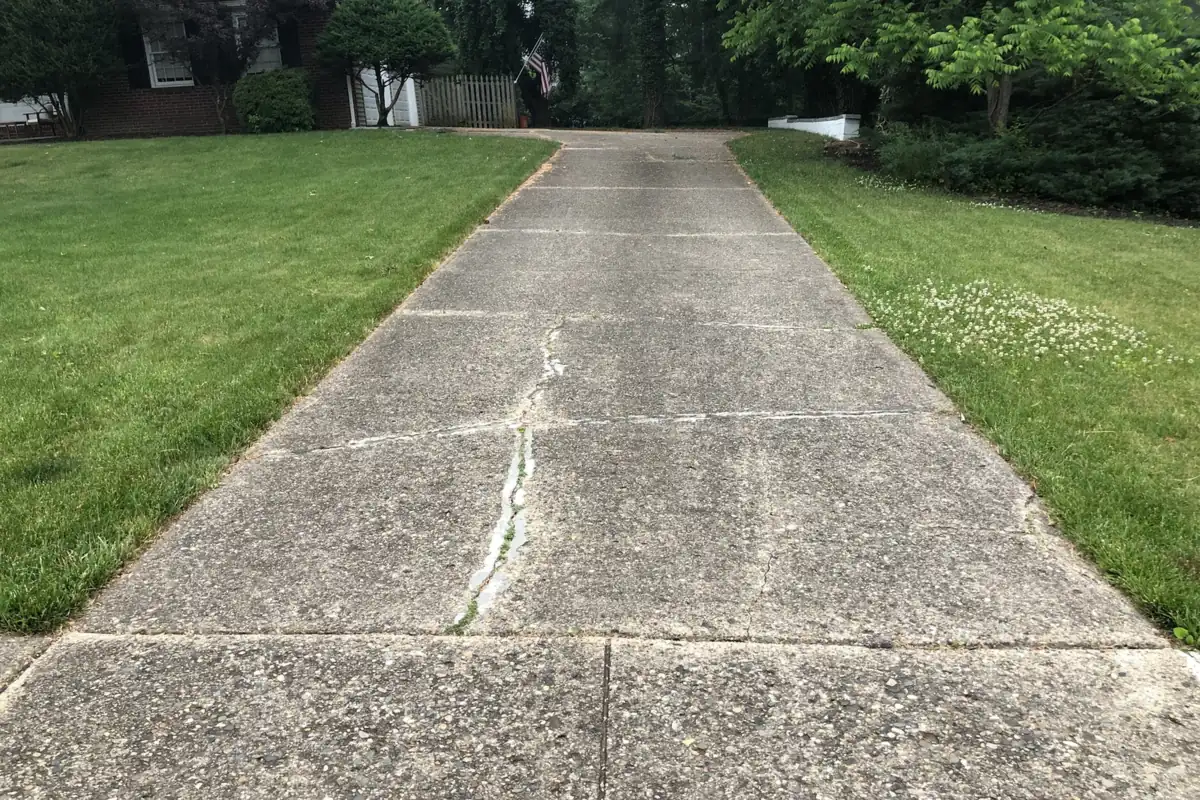
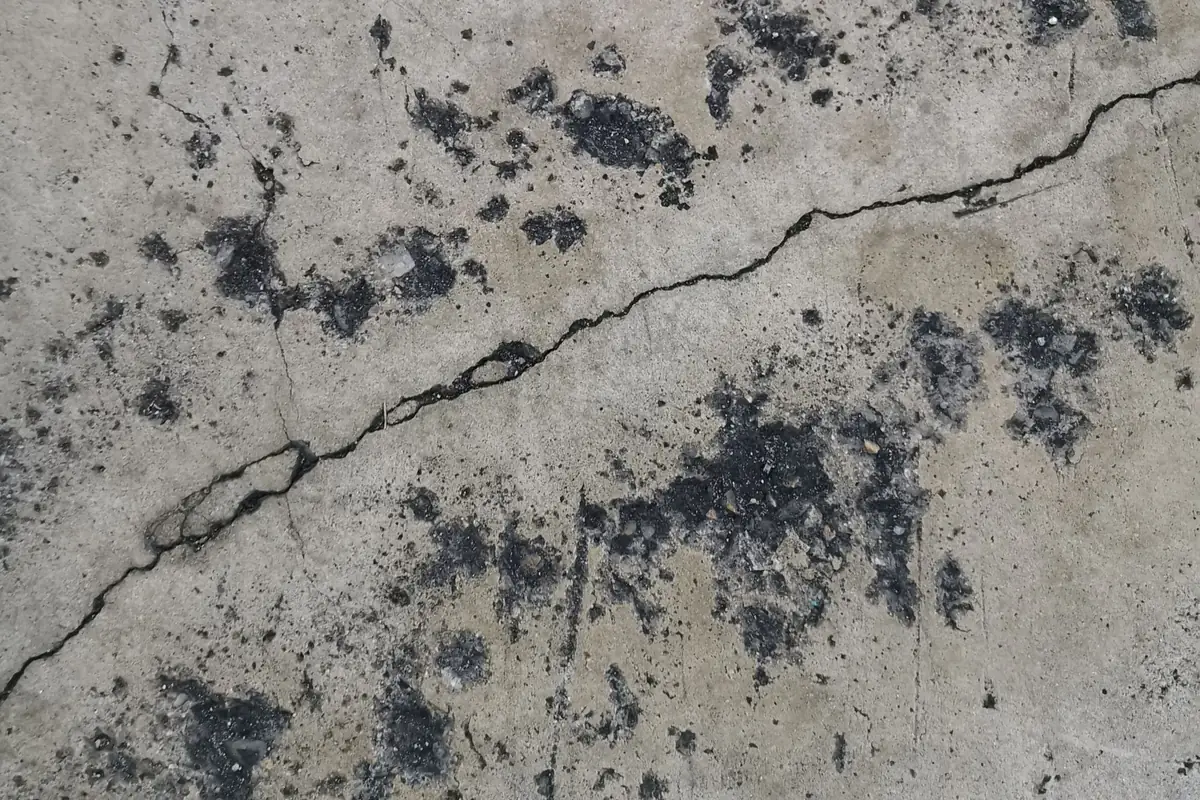
Hairline shrinkage cracks are normal and mostly cosmetic. Cracks that are opening, letting weeds through or letting water under the slab get routed out and filled with a flexible sealant so they stop growing. A crack with one side higher than the other isn't a sealing job anymore; it's a trip edge.
Spalls, flaking and a worn top
Where the surface has chipped or flaked but the slab under it is solid, spalls are cut back to sound concrete and patched, and a worn surface can take a bonded overlay. The driveway resurfacing page explains when an overlay works and when it just copies the damage.
Trip edges
The 2010 ADA Standards (section 303) give a clear yardstick for walking surfaces: up to 1/4 inch of rise can be vertical, 1/4 to 1/2 inch must be beveled, and more than 1/2 inch must be ramped. A small lifted edge on a sound panel can be ground to a bevel; a panel lifted well past that, or rocking, gets replaced.
Sections lifted or broken by roots
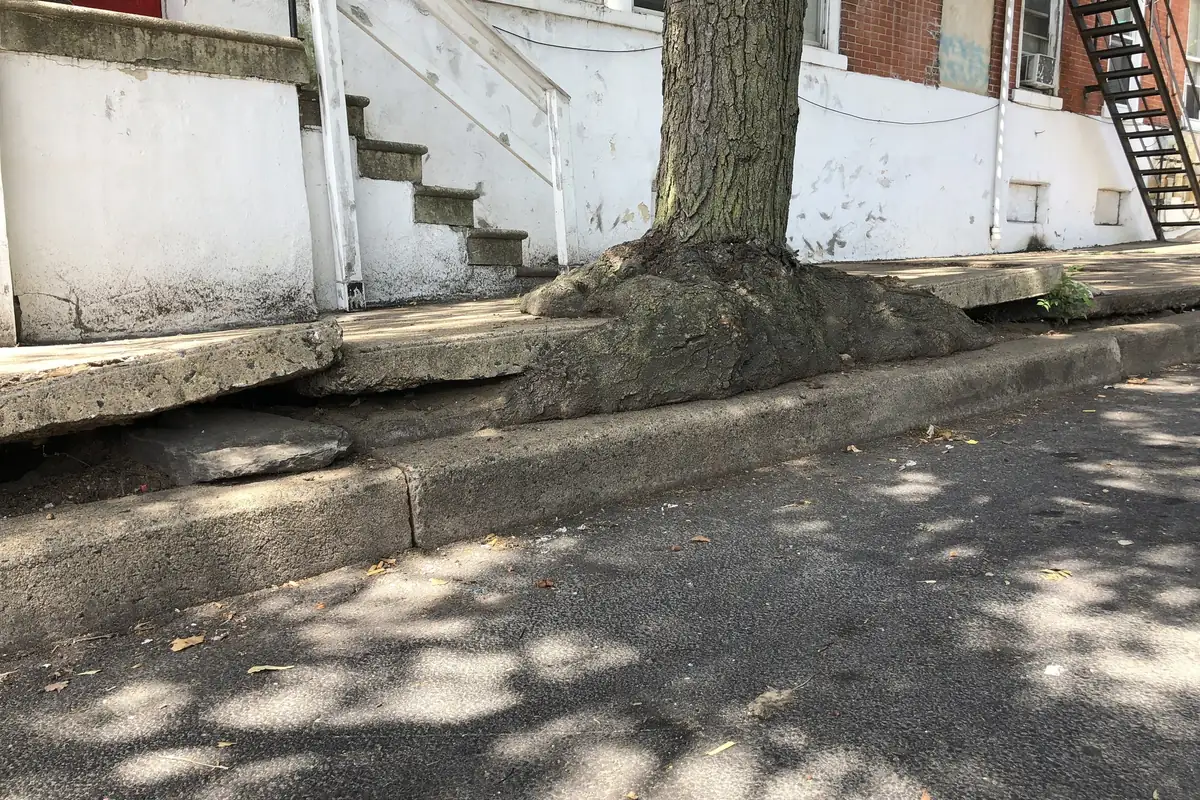
Grinding a root-lifted edge only lasts until the root grows again. The lasting fix is to cut out the lifted panel, deal with the root, rebuild the base and repour. For a tree in the parkway, root work belongs to the City; for a tree on your own lot, an arborist should decide how much root can come out safely.
Signs a section needs replacing, not patching
- The slab rocks or sounds hollow when you step on it.
- One side of a crack sits higher than the other by more than about 1/2 inch.
- A section has tipped toward the house or the garage door.
- Roots are visible at the edge, or the crack keeps reopening after it's sealed.
- The concrete has broken into loose pieces you can lift by hand.
The sidewalk in front of your house
In Burbank, the property owner is responsible for keeping the sidewalk in front of the lot from endangering people or property (BMC 7-3-501). The code's definition of "sidewalk" reaches further than the walk itself: it includes the curb, the parkway, the driveway approach and retaining walls between the property line and the street (BMC 7-3-502). If the City posts a notice, the owner has five days to repair before the City can do the work and make the cost a lien on the property (BMC 7-3-505 and 506).
Because that strip is public right-of-way, the repair itself needs a Public Works excavation permit ((818) 238-3950). Before the permit issues, the contractor needs a $1,000,000 general liability certificate naming the City and a DigAlert ticket. Burbank's permit conditions then require the new concrete to match the existing finish, run to the nearest score line in sections of at least 5 by 5 feet, and keep the cross slope to the curb at 2 percent or less, which can mean replacing a neighboring panel too. The full rules, and how parkway trees fit in, are in the Burbank sidewalk repair and street trees guide, and the work itself is on the curb, gutter and sidewalk in Burbank page.
Why concrete in Burbank cracks
Burbank's valley floor is sandy, gravelly alluvial soil with a low shrink-swell rating, so the classic clay-soil heave seen elsewhere in California isn't the usual culprit. The causes here are more ordinary: slabs poured on loose fill, base washed out by a downspout or a sprinkler, roots, slabs poured too thin or without joints, and concrete that dried too fast on one of the 53.9 days a year the airport station records at 90°F or hotter. The Burbank soil, faults and flood map guide covers the ground in detail.
How a repair is done
- 1Find the cause first
A crack from a downspout washing out the base, a root, a missing joint or a heavy truck each needs a different fix. Patching without fixing the cause just repeats the repair.
- 2Pick patch, grind or replace
Sound concrete gets sealed or patched; a small lifted edge gets ground; sunken, broken or root-lifted sections get cut out.
- 3Cut to clean lines
Replacement sections are saw-cut at existing joints or score lines so the repair reads as a full panel, not a patch.
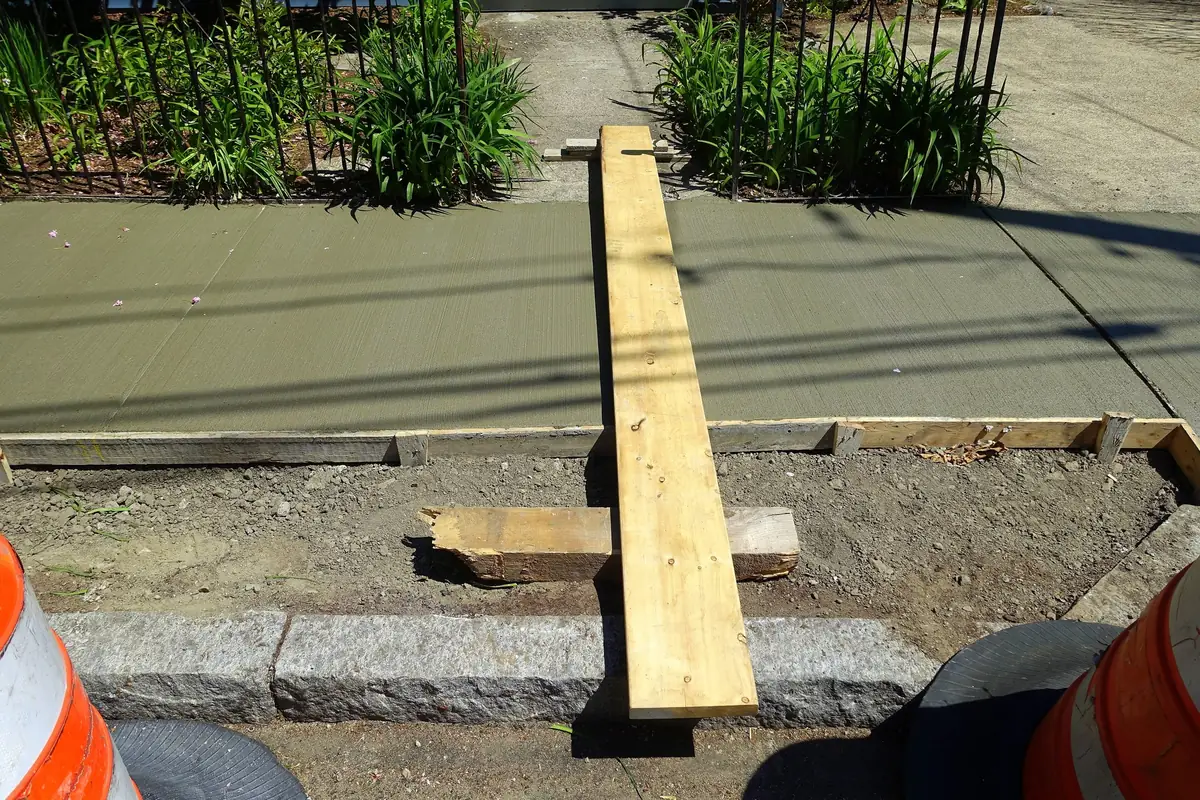
- 4Fix the base, then repour
Washed-out or loose base is dug out and compacted, roots are dealt with (by the City for parkway trees), and new concrete is doweled or tied in where it meets old.
- 5Cure and seal the joints
New sections cure before traffic, and joints and cracks are sealed so water stops getting under the slab.
When a repair turns into a replacement, see concrete driveway replacement or concrete patios, or start from the concrete contractor in Burbank page.